
An independent monitor for British household economics
Quiet Meadow was established to provide clear, neutral, and data-grounded analysis of the economic pressures shaping modern Britain. At a time when household budgets are squeezed by elevated utility tariffs and sluggish wage growth, public reporting can often feel fragmented or obscured by partisan rhetoric. We synthesize complex regulatory decisions and economic statistics into straightforward resources that help the public understand their household reality.
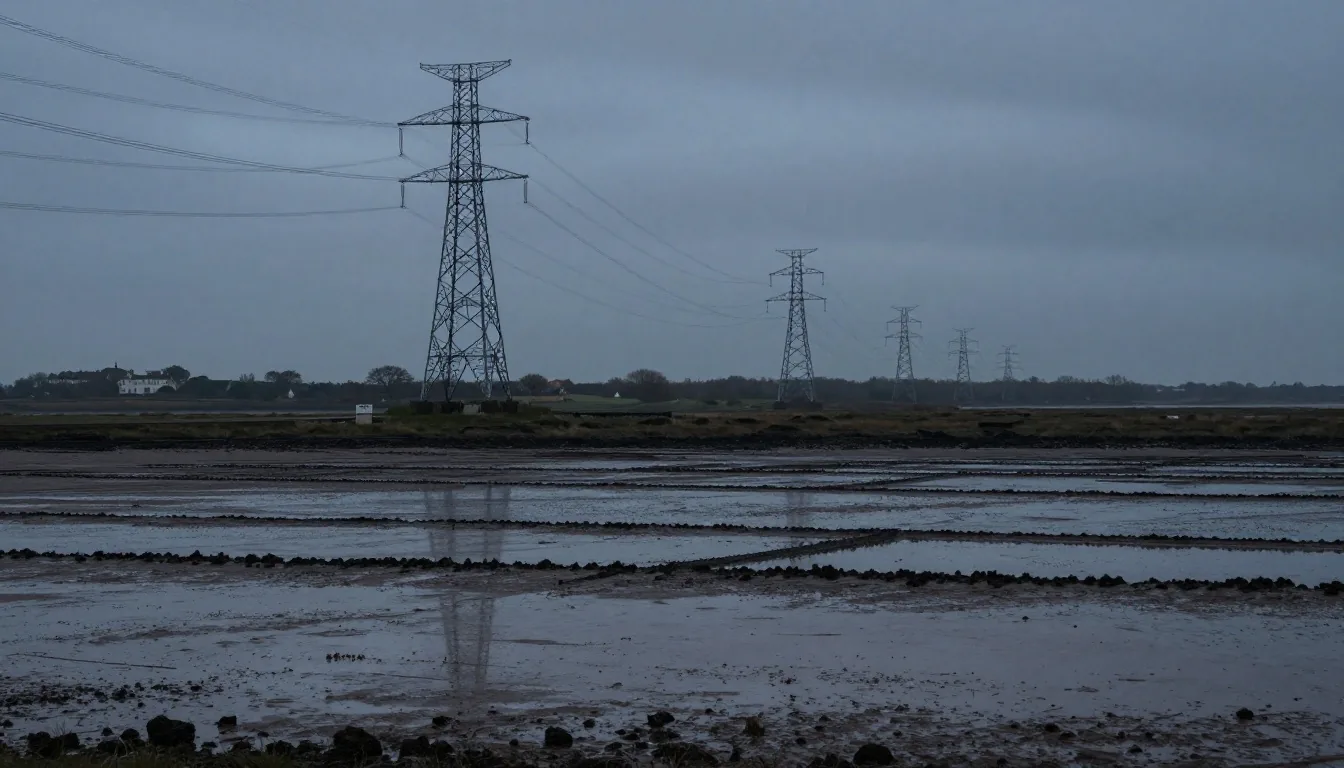
Wages versus standing charges
Tracking the direct proportion of median take-home pay absorbed by statutory standing tariffs and volatile unit prices.
Official public registries
Built exclusively on raw statistical releases from the Office for National Statistics (ONS), Ofgem determinations, and National Grid ESO telemetry.
Access empirical modeling frameworks or query our research roster directly.
Our core mission and purpose
Demystifying the systemic economic mechanisms that turn wholesale energy volatility into acute domestic payment pressure.
Our objective is simple: to track the real-world relationship between what British workers earn and what they are forced to spend on domestic essentials. By focusing directly on the intersection of wage data and energy tariffs, Quiet Meadow demystifies the mechanisms driving cost-of-living pressures. We believe that an informed public is better equipped to navigate personal finances and participate in national economic debates.
For decades, national policy commentary treated energy prices and wage bargaining as isolated disciplines. Energy economists analyzed gas interconnector trading at the National Balancing Point, while labor analysts monitored standard weekly earnings indices. When international commodity shocks hit the domestic market, millions of households discovered that fixed standing charges eroded real wage gains before pay packets could even adjust.
- Direct reconciliation of regional median earnings with domestic default tariff caps.
- Uncompromising public-domain transparency for all baseline datasets, formulas, and index derivations.
- Absolute independence from commercial suppliers, retail price-comparison commissions, and political party apparatus.

Every calculation we produce begins with the household paper record: actual quarterly statement lines, tariff surcharge schedules, and net salary distributions.
Who we are: researchers and analysts
The Quiet Meadow editorial and research team consists of economic researchers, data analysts, and consumer utility specialists based in the United Kingdom. Our contributors bring professional experience in economic modeling, regulatory compliance, and investigative journalism. We share a common commitment to objective analysis, rigorous public sourcing, and accessible communication of complex policy frameworks.

Macroeconomic Wage Synthesis
Specialising in parsing Average Weekly Earnings (AWE) microdata, regional earnings deflators, and the statutory distribution of real disposable income across low-to-middle income deciles.

Wholesale & Network Economics
Focusing on Ofgem price cap statutory methodologies, network distribution use-of-system charges, policy levy impacts, and wholesale hedging windows.

Public Interest Investigation
Synthesizing dense statutory filings into plain, verifiable reports for journalists, educators, and working households without sensationalist dilution.
Independence and funding principles
To preserve our analytical integrity, Quiet Meadow accepts no commercial advertising, affiliate commissions, or financial sponsorships from domestic energy suppliers, political parties, or corporate lobbying groups.
Our research operations are funded independently through public research grants and non-commercial educational support. This financial structure guarantees that our commentary remains completely impartial and focused entirely on the public interest.
We operate zero switching referral links. We do not receive bounty payments when consumers alter tariffs. We exist purely as an analytical witness to British household balance sheets.
Zero Supplier Affiliation
No energy supplier, distribution network operator, or retail energy reseller holds equity, governance seats, or pre-publication review rights over our findings.
Non-Partisan Mandate
We evaluate interventions regardless of which political party authored them. We test policies against balance-sheet realities rather than ideological loyalty.
Open Data Citations
Every metric cited in our dossiers includes reference citations, table identifiers, and publication dates so readers can replicate our calculations themselves.
External Advisory Review
Our models are continually tested against independent academic critique, ensuring statistical rigor and preventing systemic blind spots.
Our stance against alarmism and spin
Energy news often swings between alarmist headlines and dismissive reassurances. Quiet Meadow avoids sensational framing. We report price cap rises, wholesale market drops, and wage trends precisely as the numbers dictate. Where policy interventions succeed, we present the data; where market structures fail to deliver affordability, we trace the regulatory causes without partisan bias.
Headlines predicting imminent societal collapse cause consumer fatigue and paralysis; conversely, corporate statements celebrating fractional price cap reductions obscure the reality that baseline costs remain double historical norms. We present the math soberly, allowing citizens to make calculated household decisions.
Contextualizing Wholesale Spikes
Daily Dutch TTF gas futures surges do not instantly translate into consumer bill shocks due to supplier hedging books. We explain the lag rather than foment immediate panic.
Scrutinizing Standing Charges
Standing charges disproportionately penalize low-consumption households. We track how network maintenance costs and supplier failure levies are distributed across regions.
Real Earnings Adjustments
Nominal pay growth of 5% is meaningless if essential expenditure inflation sits at 9%. We consistently calculate real net domestic purchasing power.
Bridging the gap between policy and public
Regulatory documents published by Ofgem and statistical releases from the ONS can span hundreds of pages of technical jargon. Most working households do not have the time to dissect consultation annexes or regression models. We bridge this information gap by translating statutory formulas, standing charge allocations, and earnings distributions into plain, legible analysis that any reader can quickly digest.
400+ Pages of Consultation Annexes
Heavy econometric jargon, backward-looking cost-allowance adjustments, and supplier risk capital coefficients.
Clear monthly cost breakdowns showing exact regional pence-per-day adjustments against typical monthly salaries.
Serving journalists, educators, and citizens
Our publications serve a broad community of readers across the UK. National and local journalists use our summaries to contextualize breaking news; educators and policy advocates rely on our historical tracking to support community work; and everyday citizens consult our guides to understand what upcoming market shifts mean for their personal bank balances.
Broadsheet & Broadcast Press
Reporters rely on our fast, non-partisan context sheets immediately following price cap announcements. We verify whether wholesale price plunges are being passed to retail tariffs or absorbed in supplier balance sheets.
Community Advisors & Educators
Citizens Advice bureaus, grassroots fuel poverty charities, and adult education centers use our longitudinal charts to demonstrate the true structural causes behind domestic debt buildup.
Working Households
Families planning their quarterly finances use our neutral forecasts to evaluate fixed versus standard variable tariffs without sales-driven marketing hype or commission bias.
Collaborative research and open dialogue
Economic analysis thrives on peer scrutiny and open discourse. We maintain active dialogue with academic researchers, poverty charities, consumer advocacy groups, and market experts. We regularly review our assumptions and invite external critique to ensure that our models reflect real-world consumer experiences and the latest technical shifts in the power sector.

Tracking capital expenditure allocations in clean grid modernization and how network reinforcement charges map onto household bills.
Looking forward: our ongoing research agenda
As the UK continues its transition toward cleaner energy sources and grapples with economic productivity challenges, the relationship between wages and utility costs will evolve continuously. Quiet Meadow is committed to expanding our tracking indices, incorporating real-time grid carbon intensity metrics, and providing deeper regional modeling to keep the public informed through every phase of this national economic transition.
Granular Regional Indexing
Breaking down standing charge variations across South Wales, Merseyside, and Northern Scotland against local median pay.
Grid Transition Capital Flow
Quantifying how Contracts for Difference (CfD) strike prices balance out against seasonal fossil gas reliance.
Frequently clarified operational standards
Clear answers regarding our editorial independence, funding framework, and data integrity.
Does Quiet Meadow sell energy tariffs or earn commission on supplier switches?
How often are your wage and tariff datasets updated?
Can media organizations cite and reproduce Quiet Meadow findings?
Where is Quiet Meadow based and who manages operations?
Engage with our research desk
Whether you are a journalist verifying tariff projections, an academic researcher exploring joint studies, or a citizen with feedback on our models, our team responds to all constructive enquiries.