
Why domestic energy stays in the news
Energy bills and market developments dominate British news broadcasts and political debates almost continuously. This is not merely an editorial preference; it reflects fundamental structural shifts in how the United Kingdom produces, imports, and pays for domestic power. Understanding the systemic geopolitical, environmental, and infrastructure challenges facing the energy sector helps make sense of the daily headlines.
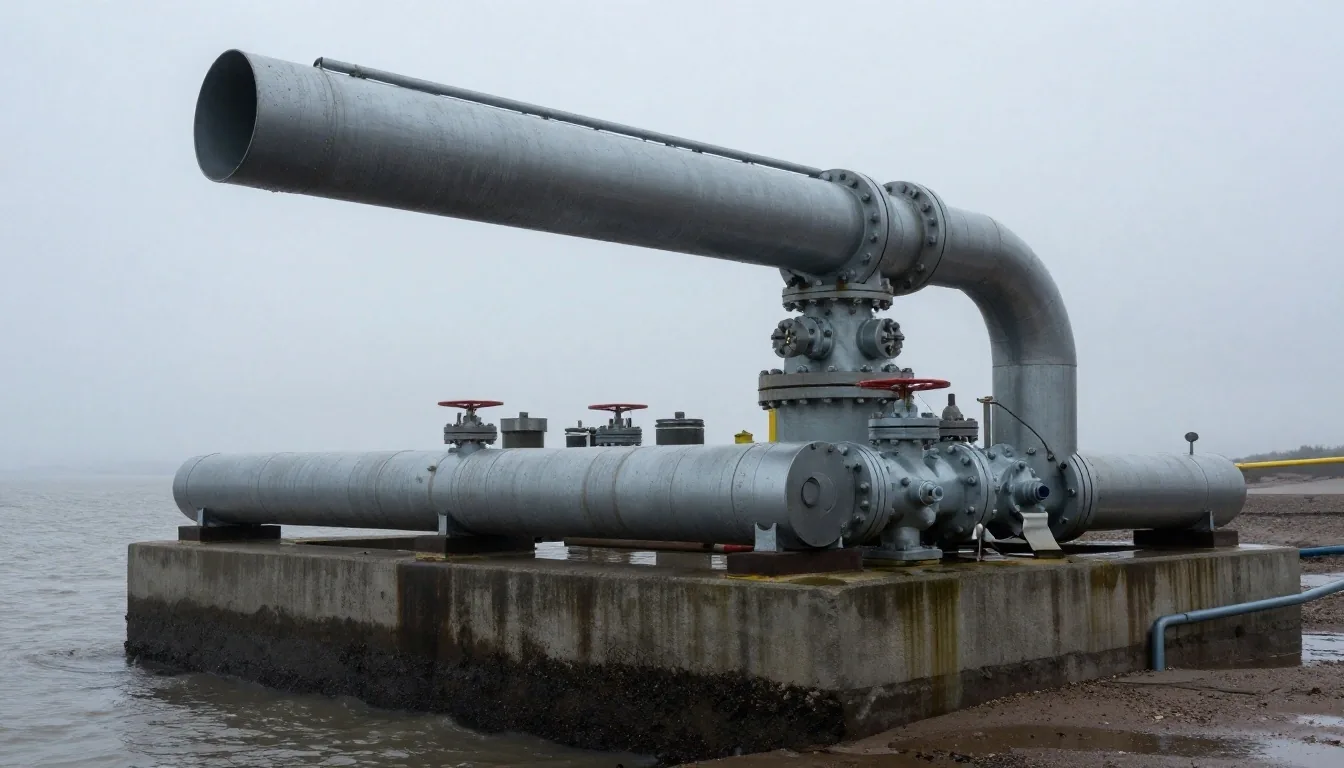
Continental Import Exposure
Declining North Sea gas reserves mean the UK now depends on Norwegian subsea pipelines and global LNG tankers, linking British domestic prices directly to global maritime auctions.
Marginal Clearing Market
The wholesale electricity clearing price is established by the most expensive generator required to balance system demand, allowing gas peaks to set tariffs across zero-fuel wind and solar.
Grid Upgrades & Standing Charges
Renewable power from Scottish waters requires massive transmission upgrades toward southern cities, translating into fixed standing charges on household bills regardless of personal usage.
The transition away from North Sea gas
The United Kingdom was once a net exporter of natural gas, but production from the North Sea continental shelf has declined steadily over the past two decades. Britain now imports more than half of its natural gas through pipeline interconnectors from Norway and via liquefied natural gas (LNG) tankers from nations like Qatar and the United States.
This structural import dependency leaves domestic consumers directly exposed to global supply interruptions and currency fluctuations, preventing domestic policymakers from shielding households with purely localized pricing controls.
The Mathematical Shift from Self-Sufficiency to Ocean Haulage
In the late 1990s and early 2000s, British gas demand was met overwhelmingly by domestic offshore drilling wells anchored off the Aberdeenshire and Norfolk coasts. Wells in the southern and central North Sea delivered abundant fuel at low extraction costs, allowing the UK to establish one of Europe's most gas-intensive domestic heating systems. Approximately 85% of British homes remain plumbed for individual gas boilers.
As legacy fields reached natural geological depletion, domestic output dropped by roughly two-thirds. To offset the gap without transitioning millions of domestic heating appliances in one decade, British energy policy pivoted toward import infrastructure: massive subsea pipelines linking the Norwegian gas basin to terminals in Easington and St Fergus, alongside high-capacity LNG regasification facilities at Milford Haven and the Isle of Grain.
Supplies roughly a third of UK annual consumption, priced against pan-European benchmark hubs.
Compete directly with Asian and Mediterranean ports, requiring UK suppliers to pay global spot premiums.
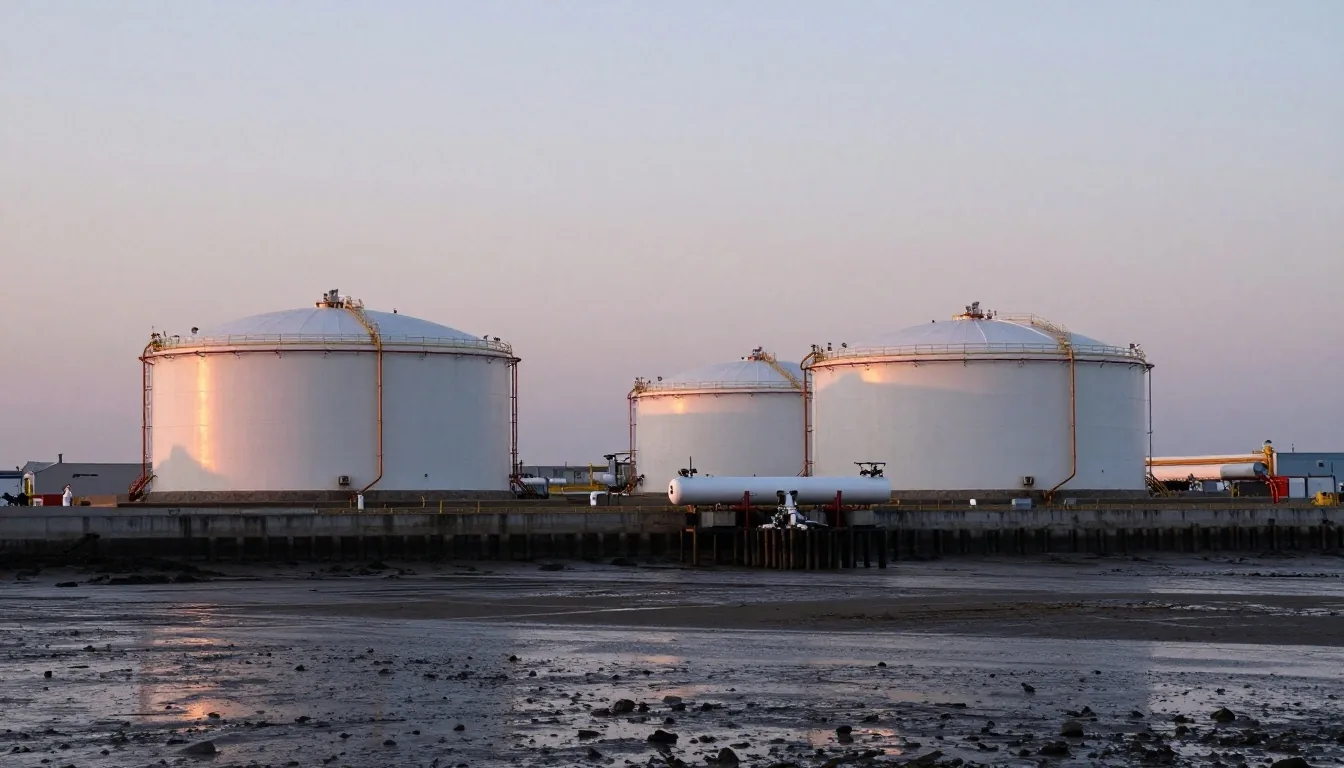
Infrastructure Reality: Seaborne cargo terminals at Grain and Milford Haven operate within an integrated international bidding auction.
Geopolitical friction and international LNG competition
Because natural gas is a globally traded commodity, events thousands of miles away directly influence domestic UK tariffs. European efforts to replace Russian pipeline supplies created intense competition for international LNG cargoes, with European terminals bidding against buyers in Japan, South Korea, and China. When global demand surges or key shipping lanes experience disruption, wholesale prices spike internationally, driving up the UK wholesale benchmarks that feed into Ofgem calculations.
Chokepoint Vulnerabilities
Tankers traversing the Suez Canal, Bab-el-Mandeb, or the Strait of Hormuz face security detours around the Cape of Good Hope. Each additional week at sea inflates vessel charter rates and burns fuel, raising landed prices across European ports.
European Storage Mandates
EU regulations mandating underground storage facilities to be 90% full before winter create coordinated summer buying drives. British domestic buyers must pay matching prices in late summer, locking in elevated tariffs for the subsequent winter period.
Asian Weather Arbitrage
Severe cold snaps in northern China or typhoons interrupting nuclear units in Japan trigger immediate spot purchase orders. Fleets of US Gulf Coast tankers can alter their transatlantic course mid-voyage if Asian hub premiums outbid UK National Balancing Point contracts.
The marginal pricing system in electricity markets
Headline reports frequently express frustration that renewable electricity prices rise alongside natural gas costs. This occurs because the UK wholesale electricity market operates on a system of marginal pricing.
The market operator clears electricity contracts at the price of the most expensive generating unit needed to balance real-time grid demand. When gas turbines are called on to supply the final megawatt-hour, gas prices determine the wholesale price for all generators, including wind and solar.
The merit order system was historically designed to incentivize generator efficiency: low-operating-cost units (nuclear, renewables) bid in at their marginal fuel cost (close to zero), confident that whatever the final gas peaker plant bids to cover expensive gas will be the uniform payment received by everyone. In an era of volatile gas shocks, this mechanism redistributes high wholesale windfalls while keeping consumer prices hitched to fossil benchmarks.
The Merit Order Dispatch Sequence
Wind & Solar Generation
Marginal fuel cost: £0/MWh. Always dispatched first whenever weather conditions permit.
Nuclear & Biomass Constant Base
Steady continuous thermal output dispatched to maintain baseline grid frequency.
Combined Cycle Gas Turbines (CCGT)
Sets Clearing PriceDispatched to cover the peak evening shortfall. The bid price of this unit becomes the market price paid to every prior step.
Grid infrastructure bottlenecks and connection queues
Developing renewable generation capacity like offshore wind in Scotland and the North Sea is only half the battle. Electricity must be transported to major population centers in the Midlands and Southern England. The existing transmission grid lacks sufficient capacity, leading to significant constraint payments where wind farms are paid to switch off while gas plants in the south are paid to ramp up.
The costs of modernizing grid lines and upgrading substations inevitably feed into consumer standing charges. This dynamic frequently shocks householders: even when families aggressively cut electricity usage at the wall socket, their overall monthly invoice barely moves because the fixed daily tariff reflects national transmission expansion projects and balancing mechanism friction.
The transmission border between Scotland and Northern England frequently hits physical thermal limits during stormy weather, requiring expensive redispatch actions.
Renewable and battery storage developers face up to ten-year waiting lists for National Grid connection offers due to circuit breaker and transformer hardware lead times.
Why Standing Charges Remain Stubbornly High
Unlike the unit rate (pence per kWh), which fluctuates with wholesale gas contracts, the daily standing charge (pence per day) incorporates non-commodity expenses that suppliers must recover regardless of fuel burn:
- Transmission Network Use of System (TNUoS): Funding 400kV undersea cables and inland pylon corridors.
- Distribution Network Fees (DUoS): Local low-voltage transformer maintenance by regional distribution operators.
- Supplier of Last Resort (SoLR) Levies: Ongoing mutualized debt from retail energy company liquidations during past market collapses.
- Policy Obligations: Social and environmental schemes shifted directly onto domestic power connections.
The ongoing debate over North Sea licensing
Political disagreements regarding new oil and gas exploration licenses in the North Sea feature heavily in national news. Proponents argue that domestic production enhances national energy security and supports tax revenues, while opponents highlight that new oil and gas is sold on international markets at prevailing global prices, offering minimal downward pressure on domestic consumer bills while conflicting with national statutory net-zero commitments.
Fiscal Revenue & Regional Industrial Retention
Advocates point out that imported LNG carries an embedded carbon footprint significantly higher than domestic pipeline gas due to the liquefaction, cryogenic ocean transit, and regasification lifecycle. Furthermore, domestic production provides direct corporate taxation through the Energy Profits Levy and sustains critical engineering supply chains across Northeast Scotland that will ultimately be required for floating offshore wind and carbon capture deployment.
- Lower operational transport emissions compared to distant LNG.
- Retention of specialized offshore marine engineering workforce.
- Direct Treasury tax yields via windfall and upstream extraction levies.
Global Pricing Realities & Statutory Climate Law
Critics emphasize that oil and gas extracted from British waters is private commercial property owned by multinational operators. Under open-market regulations, operators sell fuel to the highest bidder on international exchanges rather than offering discount tariffs to UK consumers. Additionally, opening new licensing rounds risks stranded capital assets as global demand shifts, while undermining British international credibility in multilateral climate governance.
- Zero legislative mechanism to force domestic retail discounting.
- Long lead times (often 10–15 years from licensing to first gas).
- Direct tension with statutory carbon budgets under the Climate Change Act.
Retail supplier stability and regulatory oversight
The collapse of nearly thirty energy suppliers during the initial phases of the market shock triggered intense scrutiny of Ofgem's historical oversight. In previous years, low barriers to entry allowed under-capitalized companies to gain market share without adequate financial hedges.
Following regulatory reforms, suppliers must now maintain higher capital reserves and pass stress tests, stabilizing the retail market but reducing the aggressive discounting that previously enabled active switchers to secure cheap fixed deals.
For a decade, the standard regulatory advice to consumers was simply to switch suppliers every twelve months. In the modern post-reform regime, wholesale price discipline and regulatory capital requirements have virtually eliminated loss-leading retail tariffs, leaving tariffs closely grouped around the quarterly statutory price cap.
The Regulatory Architecture Comparison
Light-Touch Entry & Spot Speculation
Suppliers relied on customer credit balances to fund day-to-day operations and bought energy on the short-term spot market rather than purchasing advance hedging contracts.
Prudential Hedging & Capital Adequacy
Suppliers must maintain mandatory capital buffers, ring-fence customer deposits into separate trust accounts, and prove forward hedging positions against severe market volatility.
The clean power target and network investment
The statutory commitment to decarbonize the British electricity grid by the 2030s requires hundreds of billions of pounds in public and private capital investment. Expanding offshore wind arrays, building new nuclear facilities, and constructing battery storage sites involve massive upfront capital expenditure.
A central tension running through political discourse is whether these long-term infrastructure investments should be funded through household energy bills or supported through general government borrowing.
Household Utility Levies
Charging capital costs directly via the standing charge and electricity unit rates ensures dedicated private utility balance sheets fund project delivery without directly expanding the national public debt ledger.
General Taxation & Gilts
Shifting network and clean energy subsidies into HM Treasury's general fiscal expenditure spreads expenses progressively across income tax and corporation tax receipts rather than per-meter bills.
Regulated Asset Base (RAB)
Applied to complex long-cycle projects like Sizewell C nuclear plant. Consumers pay a nominal fee during the construction phase in exchange for lower financing interest charges across the plant's operational decades.
How to separate market signals from political spin
Energy reporting often conflates technical market adjustments with partisan political claims. Headlines declaring catastrophic price surges or imminent bill collapses frequently rely on short-term market fluctuations that normalize before tariff caps are calculated. By focusing on fundamental indicators—such as forward gas contracts, storage fill rates, and generation mix metrics—readers can develop an objective understanding of where energy bills are genuinely heading.
What actually determines the quarterly Ofgem price cap calculation?
Ofgem calculates the default tariff cap based on wholesale forward contract prices observed over an exact three-month observation window prior to each announcement. It does not reflect the spot price of gas on the day the announcement is made. Additional fixed inputs include wholesale network charges, policy costs, operating overheads, and a standardized supplier margin. Headlines claiming an immediate drop based on a single sunny day's wind production ignore this lagged mathematical calculation window.
Why don't household bills fall instantly when international gas prices drop?
Responsible suppliers buy the bulk of their expected gas and power months in advance (known as forward hedging) to ensure they have guaranteed supplies at known costs for their customer base. While this hedging strategy prevents catastrophic sudden bill surges during unexpected international crises, it equally creates a pricing lag when wholesale commodities tumble, as suppliers must first exhaust contracts purchased at previous higher prices.
How does the UK's lack of domestic gas storage capacity alter news coverage?
Unlike European nations like Germany, Italy, or the Netherlands, which maintain massive underground salt cavern storage reservoirs capable of holding 20% to 30% of their annual gas requirements, the UK's operational storage capacity hovers around twelve to fifteen days of peak winter demand. This absence of a deep physical buffer makes British wholesale contracts disproportionately sensitive to minor pipeline outages in Norway or delayed tanker shipments, generating higher headline frequency.
What indicators should an informed reader track instead of political rhetoric?
To gauge genuine household tariff trajectory, monitor three core data streams: the UK National Balancing Point (NBP) season-ahead wholesale gas contract, continental European underground storage percentage levels entering September, and the National Energy System Operator (NESO) monthly balancing and constraint expenditure reports. These metrics dictate future Ofgem cap resets far more reliably than parliamentary debates.
Public Interest Energy Analysis • Quiet Meadow Standards
Quiet Meadow tracks British wage trajectories directly against statutory utility pricing indices. We do not provide commercial switching brokering, commercial affiliate recommendations, or speculative financial trading advice. All analytical observations derive from public records published by Ofgem, the Office for National Statistics (ONS), and the National Energy System Operator.
Explore how energy market shifts collide with UK household earnings
Wholesale gas spikes and infrastructure levies do not exist in isolation. Our companion research tracks how utility inflation has eroded real take-home wages across regional British labor markets since 2021.